

Swedish group renames hymen ‘vaginal corona’
I Was Personally Selected by God Himself
Please forgive me…but sometimes I get very emotional…when I talk about my son…. My heart…fills with so…much…joy…when I realize…that this young man…is going to be able…to help so many people…. He will transcend this game…and bring to the world…a humanitarianism…which has never been known before. The world will be a better place to live in…by virtue of his existence…and his presence…. I acknowledge only a small part in that…in that I know that I was personally selected by God himself…to nurture this young man…and bring him to the point where he can make his contribution to humanity…. This is my treasure…. Please accept it…and use it wisely…. Thank you.
I’ve learned to trust the subconscious. My instincts have never lied to me.
That’s why I know I can handle all this, no matter how big it gets. I grew up in the media’s eye, but I was taught never to lose sight of where I came from. Athletes aren’t as gentlemanly as they used to be. I don’t like that change. I like the idea of being a role model. It’s an honor. People took the time to help me as a kid, and they impacted my life. I want to do the same for kids.
Playing Politics
Steven Landsburg on a public healthcare option:
The [General Motors] takeover started with this promise from the President:
GM will be run by a private board of directors and management team…They — and not the government — will call the shots and make the decisions about how to turn this company around.
Within one month, powerful lawmakers had successfully “encouraged” General Motors to retool factories in their home states, and Senator Jay Rockefeller had prevented the closing of a dealership owned by one of his wealthy constituents.
Or recall what happened with Fannie Mae and Freddie Mac, who succumbed to so many political pressure [sic] that–well, you already know the rest of that story.
When you politicize an industry, be it cars, mortgage lending or health insurance, you invite interventions on behalf of the rich and powerful. The less rich and the less powerful foot the bill.
Twitter: 2009-12-09
- RT @smithsonian: How about a slide show of artists’ homemade holiday cards? http://ow.ly/Ki2k #
Why Tiger Woods Gets All the Girls

I get home from the gym and say to my wife, “I’m in such great physical condition, it’s a shame I’m not having an affair with 10 women like Tiger Woods.”
“Women care about money,” she says. “You don’t have 10 billion dollars so forget it.”
“Oh. Okay.”
Remember When?
Remember when Barack Obama was a brilliant and inspiring young leader who was going to revive an America that had gotten dangerously off track? To be honest, neither do we, but we were reliably informed of it at the time.
Adventures in Agile: The Scrum Board


For 3-1/2 months, we’ve been using a scrum board — not the one in the photo, but similar — to track tasks on a development project. Tasks start out on the left side of the board in a Not Started column, then move through In Progress, Code Complete and User Testing on the way to Done.
Today someone said, “We need a list of everything that still needs to be done — like the scrum board, but could you put it in a spreadsheet?”
Ummm, I could, but it wouldn’t contain any additional information than what’s on the board.
That was an eye-opener to me. I like the scrum board format because it keeps things visible. It’s easy to see what all the tasks are and it’s easy to see the status of each task.
It never occurred to me that if you record information on Post-Its and stick them on a wall, rather than recording the same information in an “official” format like Excel or Project, there will be people who assume that you’re just screwing around.
NB: It’s not their fault for not getting it; it’s a communication failure by me because I didn’t anticipate the situation.
Thus spoke The Programmer.
Time-Saving Tip of the Day
Find things that don’t need to be done and don’t do them.
Twitter: 2009-12-08
- RT @rtkrum Cool Infographics: A Visual History of the Supreme Court – New Infographic Poster! http://bit.ly/6FeJTE #
Twitter: 2009-12-07
- A toolbox of questions http://sachachua.com/wp/p/6907 #
- Either I lost 25 lbs since Friday or the scale at the gym is broken… #
It’s Not All Bad for USC Athletics
Okay, not a great season for USC football but on the bright side, the men’s water polo team won back-to-back national championships with a 7-6 win over UCLA in today’s title match.
T-shirts are available!
Twitter: 2009-12-06
- RT @OCWeekly: Tired of KOST? Here's 10 Christmas songs that don't suck: Flaming Lips, Pogues, Kinks, Low… & Eazy-E? http://bit.ly/65buaX #
Lack of Privacy Is Part of the Deal
Product endorsement is “implicitly aspirational”:
The grandaddy of such advertising in the modern age, of course, is three simple words: “Be Like Mike.” Once you’re asking people to be like you, you’re inviting them to wonder about the “you” they’re supposed to want to be like. End of privacy. In case your agents, lawyers, managers, and other handlers didn’t mention it, that’s the deal.
No More Stuffed Pugs for Christmas
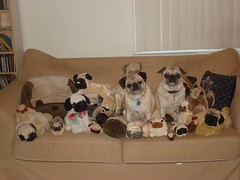
Originally uploaded by wombatarama
What Would Hope Do?
A young lady named Hope Xu — from University High right here in Irvine — scored a perfect 2400 on this year’s SAT exam.
I’ve advised my 16-year-old son that henceforth, when he’s faced with a tough decision in life, he should ask himself the question “What would Hope Xu do?”
I know one thing she wouldn’t do and that is to run into her dad’s bedroom at 11 p.m. and start doing flying front kicks when he’s trying to sleep.
“Why are you doing that?” I ask him.
“I just drank a Red Bull,” he says, then dances back out the door singing a song I don’t recognize . . .
Bad is Good
I saw a guy I used to work with on LinkedIn today . . .
The thing I remember most about him is that he believed it was bad luck to wish good fortune on someone. For example, if you said to him “Have a good day,” he believed that would in fact cause him to have a bad day.
When I worked with him, if I saw him as I was leaving the office, I’d say “Have a crummy evening.” And he’d say, “Thank you.”
Twitter: 2009-12-02
- Learning how to write http://sachachua.com/wp/p/6863 #
That Clears the Air!

Sarah Henderson, daughter of Fritz Henderson, the just-resigned-minutes-ago GM CEO, posted some choice words about Ed Whitacre, the random white guy taking her dad’s place at the top of the just-emerged-from-bankruptcy automaker, on the automaker’s public Facebook page!
Why Social Networks Matter
We’re Going to Let You Die
I will actually give you a speech made up entirely–almost at the spur of the moment, of what a candidate for president would say if that candidate did not care about becoming president. . . .
“Thank you so much for coming this afternoon. I’m so glad to see you, and I would like to be president. Let me tell you a few things on health care. Look, we have the only health-care system in the world that is designed to avoid sick people. [laughter] That’s true, and what I’m going to do is I am going to try to reorganize it to be more amenable to treating sick people. But that means you–particularly you young people, particularly you young, healthy people–you’re going to have to pay more. [applause] Thank you.
“And by the way, we are going to have to–if you’re very old, we’re not going to give you all that technology and all those drugs for the last couple of years of your life to keep you maybe going for another couple of months. It’s too expensive, so we’re going to let you die. [applause]
“Also, I’m going to use the bargaining leverage of the federal government in terms of Medicare, Medicaid–we already have a lot of bargaining leverage–to force drug companies and insurance companies and medical suppliers to reduce their costs. But that means less innovation, and that means less new products and less new drugs on the market, which means you are probably not going to live that much longer than your parents. [applause] Thank you.”