More People I’m Sick Unto Death Of: Second-Guessers

 
Super Bowl 50

I spent my lunch hour listening to co-workers second guess the Panthers offensive play-calling in yesterday’s Super Bowl. I don’t like second-guessers, for a couple of reasons.

  1. Once a game is over, it’s easy to say the team that lost should have done something different. Feel free to advance any theory you want since there’s no way to wind back the clock and falsify it. It’s like taking a test when you already know the answers. It gives you an opportunity to make yourself sound smarter than the people who had to take the test without knowing the answers.
  2. What are the odds that someone with his fat ass parked on a sofa watching the game really came up with a better play-calling strategy than the coaching staff of a team with 17 wins and 1 loss?

Super Bowl 50: The Cam Newton Karma Game

 
Super Bowl 50

You probably know people like Cam Newton, co-workers maybe, who like to call attention to themselves — Look at me! Look what I did! — and like to rub your nose in it when things aren’t going well for you.

I don’t like people like that.

I don’t think a choreographed activity has to take place every time you make a first down. I saw a game this year where Newton threw a screen pass to a receiver, who ran 50 yards with it for a touchdown. Newton ran all the way to the end zone to perform a choreographed celebration, not with his teammates, but standing all by himself. Look at me! And he really hadn’t done anything. He threw a screen pass.

He came out for Super Bowl warm-ups wearing gold cleats. Look at me! I’m wearing gold cleats! After the game, he ungraciously answered a handful of questions, then walked out of the room. That’s inappropriate. If you want to call attention to yourself when things are going good for you, be willing to take the negative attention when you suck.

I recommend that he develop some choreographed activities for losing, for interceptions and for fumbles that lead to touchdowns for the other team . . . like an Oopsie Face, or rotating his fists in front of his eyes like he’s wiping away imaginary tears . . .

Final Score: Broncos 24, Panthers 10.

Shut Not Your Doors to Me Proud Libraries

 
Walt Whitman
Steel engraving of Walt Whitman. Published in 1855 edition of Leaves of Grass

Shut not your doors to me, proud libraries,
For that which was lacking among you all, yet needed most, I bring;
A book I have made for your dear sake, O soldiers,
And for you, O soul of man, and you, love of comrades;
The words of my book nothing, the life of it everything;
A book separate, not link’d with the rest, nor felt by the intellect;
But you will feel every word, O Libertad! arm’d Libertad!
It shall pass by the intellect to swim the sea, the air,
With joy with you, O soul of man.

— Walt Whitman, “Shut Not Your Doors to Me Proud Libraries”

Killer Elephants: Another Reason I Prefer to Just Stay Home


It occurs to me that elephants are wild animals, not supposed to be ridden, and should just be left alone, although my wife, who is from Thailand, says that people have been riding elephants there since 1800-something and that the victim must have been doing something weird to wind up on the business end of a tusk.

Thai Elephant

Feb. 5, 1917: Immigration Act Passed Over Wilson’s Veto


On this date in 1917, Congress overrode President Woodrow Wilson’s veto of the previous week and passed the Immigration Act of 1917, which, among other provisions, introduced a period of near complete exclusion of Asian immigration to the United States.

Not that life was a bed of roses for Asian immigrants before 1917. Asian laborers were sought out for demanding and dangerous railroad jobs involving explosives. The phrase “Chinaman’s chance,” meaning little to no chance at all, dates from this period. Asians were not allowed American citizenship and were frequent victims of hostility and violence with no legal recourse.

For example, in 1854, George W. Hall was convicted of murdering a Chinese man. On appeal to the State Supreme Court the decision was overturned because all of the evidence against him was from Chinese individuals.
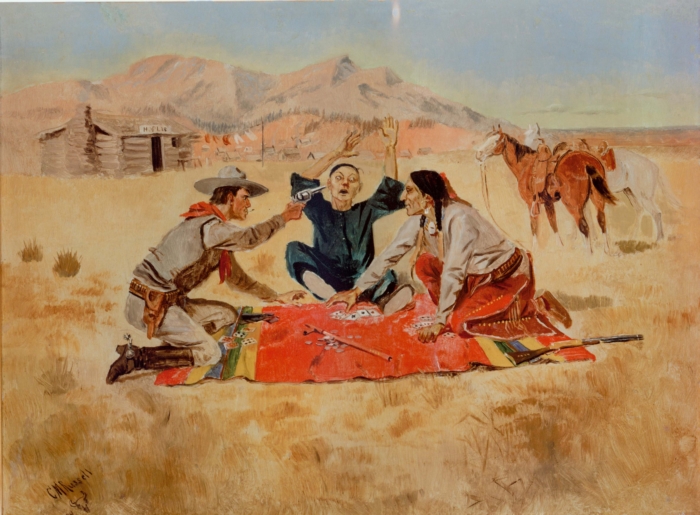
Not a Chinaman's Chance by Charles M Russell 1894

According to the Supreme Court ruling, the Chinese “recogniz[ed] no laws … except through necessity, [brought] with them their prejudices and national feuds, in which they indulge[d] in open violation of law.”

The court also noted that their “mendacity is proverbial; [that they were] a race of people whom nature has marked as inferior, and who are incapable of progress or intellectual development beyond a certain point … [and they would not be granted] the right to swear away the life of a citizen, … [or] the … privilege of participating with us in administering the affairs of our Government.”

After the Immigration Act of 1917, existing Asian immigrants were excluded from employment by racial hostility and increasingly moved into self-employment as laundry workers, store and restaurant owners, traders and merchants. Chinese immigrants congregated in Chinatowns established in California and elsewhere.


Between 1942 and 1946, 110,000 to 120,000 Japanese Americans were incarcerated in internment camps. About two-thirds of those interned were second- and third-generation citizens by birth.
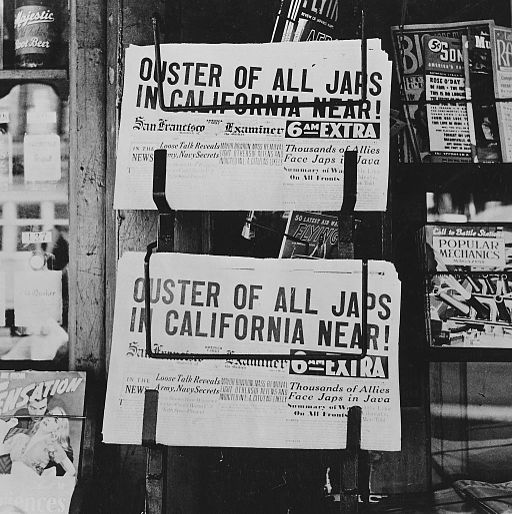
Newspaper headlines of Japanese Relocation - NARA - 195535

Sixty-two years of Chinese exclusion ended in 1943 with the passage of the Magnuson Act, which allowed a quota of 105 persons to immigrate each year. Yes, that is the correct number — 105 Chinese immigrants per year. In 1946, the Luce–Celler Act provided for an annual quota of 100 immigrants per year from the Philippines and India.

Token immigration quotas remained in effect until the Immigration and Nationality Act of 1965 abolished the quota system based on national origins.


In the last 50 years, Asians have risen to the top socio-economic levels of American society, proving once again that what happens to you is not nearly as important as how you react to it.

Asian-Americans seem to be focused on keeping their families together and making sure their kids get a good education, rather than peddling grievances about the past or even the present, e.g., Why are Asians not being nominated for Academy Awards? or Why has there never been an Asian president?

Free Advice on Free Advice

 
Shoulder pain

Today a colleague offered to fix the pain in my shoulder. “Sounds like a problem with the connective tissue,” he said. “I can push it back into place.”

“No,” I said. “No no no no no no no.”

“Why not? Are you homophobic?”

“Not wanting you to push on my shoulder is not homophobic.” Also this guy is not gay.

“You don’t trust me?”

“I was trying to think of a nice way to say that.”

“I have a gift for this. I’ve helped a lot of people.”

“You might be able to fix it. Probably you could. On the other hand, you might, just perhaps, push on it the wrong way and I lose the use of my left arm. Not worth the risk.”

He then recommended that I go to a health food store and buy some red something-or-other algae to use as an anti-inflammatory.

Which I’m not going to do . . . If someone recommends a movie I should see, I might check that out. Even if it turns out to be terrible, which it usually does, I’ve only lost a few bucks and a couple hours of time. Same with a restaurant. Or a book.

But on medical matters, when someone says “You should go to a health food store and buy some of this product and eat it,” I’m not going to do that because the recommender doesn’t know anything about my health condition, medical history, medications I might be taking, doesn’t know anything about chemistry, biology, pharmacology . . . I’m dead and the person who told me to eat algae is scratching his head going, “Hmmmm, that never happened before. Maybe I should have gone to medical school to actually learn something.”

Feb. 5, 1631: Roger Williams Arrives in America

 
Roger Williams
Roger Williams, founder of Rhode Island, meeting with the Narragansett Indians

It’s hard to imagine the sense of infinite potential accompanying the arrival on the North American continent in the 1600s . . .

Roger Williams came to the Massachusetts Bay Colony in Boston from England. Four years later, in 1635, he was banished from the colony for, among other things, speaking out against the right of civil authorities to punish religious dissension.

After leaving Massachusetts, Williams, with the assistance of the Narragansett tribe, established a settlement near Narragansett Bay, located in present-day Rhode Island. He declared the settlement open to all those seeking freedom of conscience and the removal of the church from civil matters.

Williams named the community “Providence.”

Spartans Are Overrated

 
Spartan Race logo

Some of my work colleagues participated in a Spartan Race this past weekend, which seems like a good way to acquire a bacterial infection but to each his own.

Slightly off-topic but Spartans didn’t fight very well and instead of fleeing, they let themselves all be killed by Persians . . . so I’ve always wondered why Spartans have become synonymous with positive qualities like commitment and toughness and resilience, instead of being remembered as milksops with cool headgear . . .

The People v. O.J. Simpson

 
O.J. Simpson

There’s a miniseries coming out called The People v. O.J. Simpson: American Crime Story. I’m not going to watch it, not for any singular reason — I don’t watch other TV shows either — but I don’t remember the Simpson trial having a great deal of entertainment value.

  1. The trial proved beyond a reasonable doubt that Simpson was guilty, even though a guilty verdict was not returned.
  2. Eight of the 12 trial jurors were black women. The prosecution believed that the jurors would identify with the female victim. The defense team believed that the jurors would identify with the black murderer. The defense was right.
  3. Conventional wisdom says that anyone who can’t get out of a lengthy term of jury service is not very bright. Only two of the Simpson jurors had a college degree. One never finished high school. The prosecution bored and confused them with DNA evidence. The defense gave them a nursery rhyme. You know the result.

Michigan Man Dies in Crash While Masturbating to Porn Video

 
Grim Reaper

Michigan man dies in crash while driving and masturbating to porn on his phoneNY Daily News

Years ago, I was in a public restroom stall in an office building when I felt a mild earthquake. It occurred to me that a bad way to die would be to have a building collapse on you while sitting on a toilet, only to be pulled out of the rubble on the evening news with your pants around your ankles, covered in excrement.

But even that ignominious scenario pales in comparison to the egress of Clifford Ray Jones, age 58, who was driving down I-75 in Detroit with his pants off, watching a pornographic video on his phone. His hands were somewhere other than at the recommended position of 10 and 2 on the steering wheel when he crashed his 1996 Toyota and was hurled out the sunroof.

It’s embarrassing enough to be 58 years old and driving a 20-year-old Toyota, but to be hurled out the sunroof and killed sans pants, that’s the ultimate.

I told my wife, “If this happens to me, when someone asks ‘How did your husband die?’ please make something up. That’s my final request.”

A Different Kind of Voter

 
Trump yard sign

[A Republican political operative] described driving down a street on the west side of Manchester[, N.H.], checking out the houses. He noticed Trump signs in front of houses that he knew had never displayed signs before. Seeing that, he began to think that all the talk about Trump appealing to a different kind of voter might be true.

National elections amount to a choice of which gang of thieves you’d prefer to be robbed by. So of course a lot of people opt out of the process. What is the point?

The “different kind of voter” that Trump appeals to is the voter who is equally disgusted with both parties and would prefer to vote for a second American Revolution.

Trump appeals to the voter who objects to being told by those in power, “You cannot vote for this outsider, this new person, who has not built up your hopes and let you down your whole life like we have.”

I think there are a lot of people like that.

Why Don’t Asians Care About the Oscars?

 
Academy Award

From the Washington Post:

Very white Oscar nominations leave Academy president ‘heartbroken and frustrated’

From the Los Angeles Times:

Oscars 2016: It’s time for Hollywood to stop defining great drama as white men battling adversity

From the Wall Street Journal:

Black Actors and Directors Shut Out of 2016 Oscar Race

Why don’t Asians seem to care about the Oscar whiteness crisis that continues to rage unabated? Maybe they’re too busy with jobs and school . . .

The 30 Most Anticipated TV Shows

 
Thomas Jefferson

My fellow Americans —

I just saw a link to The 30 Most Anticipated TV Shows of 2016. How many TV shows do you people have if thirty of them are the most anticipated?!

Some despotic regimes around the world rely on starvation and threats of violence to keep the people in a state of submissive compliance. Here in America, the same collective stupor is effected via mindless entertainments and gadgetry.

I’d like to see my countrymen raise themselves out of depression, paralysis and failure and resist this massive government/corporate dystopia — But I might miss my TV programs, said the serfs and lackeys.

Thomas Jefferson

Tony Robbins’ Wealth-Building Tips Seem Pretty Useless

 
Tony Robbins

Tony Robbins has 6 tips for Building Wealth Now. Let’s look at each of the tips and apply the “would anyone advise the opposite?” filter to assess the value of Robbins’ advice.

  1. Don’t lose money. I’m not kidding, that’s the first tip. Would anyone advise “Lose money”? No. So this “tip” is useless.
  2. Look for investments in which rewards far outweigh risks. Would anyone advise “Look for investments in which risks far outweigh rewards’? No. Robbins recommends using “the 5-to-1 rule,” in which the potential returns on an investment are 5 times greater than the potential losses. Why 5? Why not 10? Or 100? Where do you find these investments? I have no idea.
  3. Don’t overpay taxes. Would anyone advise “Overpay taxes”? No.
  4. Diversify. Would anyone advise “Don’t diversify”? Possibly. There’s a couple of schools of thought on diversification: 1) Don’t put all your eggs in one basket; and 2) Put all your eggs in one basket, then watch that basket. So there’s a tip for you: Diversify.
  5. Watch out for mindless spending. Would anyone advise “Spend mindlessly”? No. Robbins says if you spend $40 a week on restaurant meals, consider inviting friends over for a low-cost dinner at home instead. “In a year, you’ll have saved $2,000. If you invest that $2,000 every year, in 40 years you’ll have half a million dollars.” No, in 40 years you’ll have $80,000. Maybe. Given some assumptions about your rate of return, you might have half a million dollars, but on the other hand, you might make some bad investments and wind up with nothing.
  6. Stop sabotaging yourself. Would anyone advise “Sabotage yourself”? No.