


Imagine and identify the few properties of your product or service that will gratify the customer’s need. Visualize the properties, desire them yourself, and everywhere ensure and intensify their presence.
Imagine and identify the few properties of your product or service that will gratify the customer’s need. Visualize the properties, desire them yourself, and everywhere ensure and intensify their presence.
The goal on a project is not to have the correct plan in advance but to make the right decisions every day as things that were unknown become known.

I’ve heard that dogs can count up to 4 or 5. I’ve never tried to go that high but I know I can count up to 2 because every morning my owner gives me 2 vitamin tablets and when he gives me the first one I wait for the second one and when he gives me the second one I run off and do something else.
Oh this is unexpected! He just dropped a vitamin tablet on the floor so I ate it!
Now he’s giving me the first vitamin tablet . . .
(Waiting . . . waiting . . .)
I’m getting a bad feeling about this. DON’T TELL ME THE DROPPED ONE COUNTS AGAINST MY DAILY ALLOTMENT!
— Lightning 

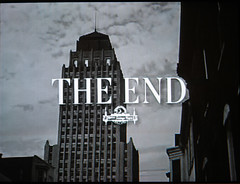
of one hundred movies there’s one that’s fair, one that’s good
and ninety-eight that are very bad. . . .. . . millions of dollars spent to create
something more terrible than the actual lives of
most living things; one should never have to pay an
admission to hell.

He is a bad dog . . . a pit bull mix. Last night he attacked Kumba the Shih Tzu, who is my neighbor across the street, and Kumba’s owner.
My owner heard screaming and ran outside. The pit bull owner was holding his dog back and Kumba’s owner was down on the sidewalk bleeding and screaming. She was very scared. She held her hand up to my owner like a drowning person.
Kumba was hiding in some bushes behind a tree so my owner went in and carried him out. Then the police came and the firemen came.
Kumba had a bite on his back and one of his back legs was hurt but he’s going to be okay and his owner is going to be okay.
I told Kumba he was very brave, even though he wasn’t. But it made him feel better and there was no harm in it.
Shih Tzus aren’t fighting dogs like pit bulls and pugs . . .
— Lightning

Looking over my notes from an Edward Tufte course . . .
Looking over my notes from an Edward Tufte course . . .


The Bay Area just had its foggiest May in 50 years. And thanks to global warming, it’s about to get even foggier.
The sight of Golden Gate Bridge towering above the fog will become increasing rare as climate change warms San Francisco bay, scientists have found.
As a member of the Trojan Network and a graduate of the School of Engineering, I make myself available to answer questions from current USC engineering students about what life might have in store for them.

I got an email today from a young man who included this priceless bit of information: “When you got your master’s degree, I was one year old.”
Really?! It seems like just last week but thanks for reminding me that 20 years have gone by.
Look kids — if you want to do a computation like that, go ahead, but keep the results to yourself . . .
USC in the foreground, downtown in the background . . .


Behavioral economist Daniel Kahneman suggests that we have two selves: an experiencing self and a remembering self. . . . Your experiencing self lives in the present and is happiest spending time around people you like. . . .
The remembering self cares about story, and about appearances. . . .
Your remembering self cares about money and mobility deeply. Why? No one wants to be remembered as the person who “didn’t do anything with their life.” Getting rich and moving around a lot adds dramatic, tangible plot-points to your story, which comforts your remembering self greatly. But your experiencing self can easily be less happy. What if you are unable to turn your money into people you enjoy spending time with? What if you move away from the people and places that bring you joy?

My son’s half-Asian — his mom is Thai — and he feels like he’s missing out on an important Asian tradition.
“On Chinese New Year,” he says, “Chinese kids get wads of cash. Koreans have a holiday where kids go to relatives’ houses, bow to people and get wads of cash.”
He mentions a Korean friend of his who raked in 180 bucks the last time this holiday rolled around.
“Why isn’t there a Thai holiday where kids bow to people and get wads of cash?” he asks.
“Isn’t that how pretty much every day goes for you?” I ask. “Without the bowing, I mean. Handing you wads of cash though — that part is in full effect.”

I know I shouldn’t say this about one of my own speakers, but I thought Sarah Silverman was god-awful.
Kudos to @TEDChris for making TED an unsafe haven for all! You’re a barnacle of mediocrity on Bill Gates’ asshole.

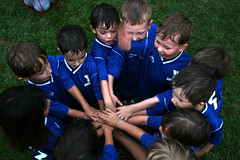
How can I help you succeed? How can I help you ask strong questions, take wise risks and deliver great content? How can I help you prosper? Most importantly, how can I help you learn and make new connections? How can I help you serve the larger group, of which we are both a part?


