

Brick walls are there for a reason: they let us prove how badly we want things.
If I could only give three words of advice, they would be, ‘Tell the truth.’ If I got three more words, I’d add, ‘All the time.’
All goes onward and outward, nothing collapses,
And to die is different from what any one supposed, and luckier.
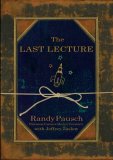
Randy Pausch was lucky in that, thanks to the worldwide fame he achieved from his lecture and book, he died knowing that things he did and said would not be forgotten after he was gone.
Without the pancreatic cancer, he couldn’t have achieved that. Let’s face it, you can’t peddle the kind of pabulum cited above as “wisdom” in the absence of a terminal illness.
We own this book because my mom sent it to my son for his birthday. He hasn’t read it yet and probably won’t, but I read it.
I feel bad saying it, but it’s a tiresome collection of warmed-over platitudes. It’s like being cornered by your most annoying advice-giving relative at a family reunion.
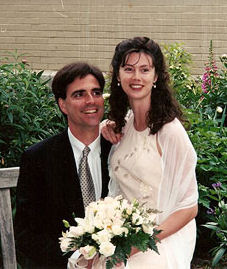
Pausch was also lucky in being able to make an early departure from his famously self-absorbed wife, Jai (pronounced Jay), who didn’t want him to give the lecture in the first place because it would mean taking time away from her.
From a Wall Street Journal story last May:
A friend suggested to Jai that she keep a daily journal. She writes in there things that get on her nerves about Randy.
My wife would totally do that, but I bet there are some women would use the journal to record things they cherish about their terminally ill husbands.
“Randy didn’t put his plate in the dishwasher tonight,” she wrote one night. “He just left it there on the table and went to his computer.” She knew he was preoccupied, heading to the Internet to research medical treatments. Still, the dish bothered her. She wrote about it, felt better, and they didn’t need to argue over it.
Hey honey, just put the goddamn plate in the goddamn dishwasher, will ya? It’s part of living with other people. God knows what sort of minutiae this man would be having soul-crushing arguments about over the course of a normal lifespan.
I mean, I’m no saint, but I’ve put other people’s plates in dishwashers hundreds of times, and they were all in perfect health.
R.I.P., Randy Pausch.
I tell my son, “When you call grandma to thank her for the book, tell her you really liked the part about brick walls letting us prove how badly we want things.”
Every ray of sunshine needs it’s cloud…..you are that cloud on this obvious ray of sunshine we all need, no matter what kind of inane drivel you think it is.
The cancer brought his speech to the attention of more people than it would have done otherwise, yes. What he had to say was not unique, original or even unconventional wisdom, but it was still wisdom. It was what most people need to be reminded of from time to time as much as they need to be reminded of common sense. I haven’t read the book, but I have seen the full lecture, and I imagine the book would pale in comparison. It was the combination of his situation and his enthusiasm during the delivery of the lecture that made it the sensation that it became.
I imagine the wife’s journal entry was more about her overall frustration than the dish. No one I know would write about how much they cherish someone in their journal unless they were wishful of a situation they weren’t in, like a pre-teen writing about their crush on Donny Osmond. I think most people write to get their frustrations out, especially “Hostile” frustrations.
Maybe your mom sent it to your son knowing he wouldn’t read it and you would? Pretty sneaky, sis.
Hi MS —
Wouldn’t you write down things you cherish if you knew you were going to lose someone? My friend PE told me one time that he writes down things about his son because as the boy grows up he feels like he’s losing him a little bit every day and he doesn’t want to forget anything.
OK, you got me there.
HW is right — parents keep photo albums and scrapbooks and things of their kids instead of writing in journals about how annoying they are … not that kids aren’t annoying — they certainly are — but they’re gone before you know it and you want to remember the good stuff.
To HW-
No, I don’t think I would. I don’t. I already know I am going to lose everyone eventually, and I don’t write about what I cherish, I write about what frustrates me. I do, however, take a lot of pictures to help me remember things I cherish. A picture is worth a thousand words, right? Maybe I’m being lazy, or am I being efficient?
Still doubtful. The very idea may be the male equivalent of the female fantasy of the “perfect” wedding or the “magical” wedding anniversary. Besides, when people write in a journal, they write about themselves and what they’re feeling. I would imagine the spouse of a terminally ill person with two small children would be overwhelmed nearly all the time, knowing they will soon be shouldering all the responsibilities of a household alone sooner rather than later. Maybe the positive thoughts aren’t as plentiful as the negative ones. It’s the terminally ill people who write about what they cherish, as if the act of writing it makes them more permanent than they are.
To PE-
That’s a bit of a non sequitur, but I’ll pretend I didn’t see it. The parent/child relationship is significantly different than the spousal relationship, at least at the ages we’re discussing don’t you think?
oops, I mean “>”, not ?
Doh.
Perhaps Jai was writing about the annoying aspects of Randy to help her cope with the fact she was losing a her best freind, her husband, her lover. Good luck with your son, family, freinds and community.
HW- You are way too harsh on Jai. My husband was 48 (and very fit and youthful looking) when he was diagnosed with cancer, and our three kids were 6 and under (the youngest was not even a year old). Trying to survive the horrors of cancer treatment, AND do all the daily “normal” stuff with the kids (who didn’t know until the morning of my husband’s surgery that anything was wrong with daddy) was a nightmare in every way. In fact, I don’t think any of you out there can imagine just what a horror it was unless you have lived through cancer as a young adult in the prime of your life. You THINK you know what a nightmare it is, but you have no idea just how bad it is. All I wanted to do was lie in bed with the covers over my head, but the show must go on – someone had to make breakfast, tie all the shoes, buy the diapers, do the housecleaning, and cope with all the normal living stuff, which is hard enough when you have a healthy spouse. Keeping on top of the tests, the doctors, the endless research on new treatments, and trying desperately to keep my husband’s emotional health together on top of everything else was overwhelming. I can understand a dirty dish literally pushing you over the edge. It’s not the dish, it’s that the dish represents ONE MORE THING that you have to deal with, and you are dealing with more than you can handle at the moment. Any of you out there with three kids under the age of 10? It is stressful. Add a terminally ill husband who you love dearly and can’t imagine living without, and it is a miracle this woman is still standing in one piece, especially with the glare of publicity now on her.
Unlike poor Randy, my husband survived and is alive and well, though no one except the two of us know what permanent emotional damage cancer has done to both of us. The small scar on his body is nothing compared to the personal hell we lived for a year. Had Randy lived, I am positive that the small irritant of the “dirty dish” would have still been irritating to Jai – (as it still is to me) but also a reminder that Randy was still around to irritate her in that small harmless way.
Jai will miss the inconvenience – if she doesn’t already.
As for the book, I finished it today, and while I have to agree that this book would not be a bestseller but for Randy’s terminal illness, it is worth reading. It certainly makes you think about your priorities in life, and about prioritizing time. As I tell my family – yesterday is history, tomorrow a mystery, but today is a gift.
I think those are extremely harsh statements to have made about Jai.
You have no right to call her self absorbed,Its easy to look at a person whos going through such pain,from the outside and make comments about them.
Get a life!
HW, you have the right to your own interpretation and opinions. They are all yours, processed through the prism of your own life experience/s, character, ethics and moral frame. It is obvious that the way you interpreted Pausch’s pabulum in his lecture and book came from your cynical mind. To this, one of the commentators [MS] said better than I’d have said myself:
>>What he had to say was not unique, original or even unconventional wisdom, but it was still wisdom. It was what most people need to be reminded of from time to time as much as they need to be reminded of common sense.>>
What bothered me in your comments though is the fact that you sliced out sentences from the quoted article in The Wall Street Journal, leaving out the thick of the content. Thus your statement that Jai is a “famously” (why famously? she’s not a celeb) self-absorbed woman, leaving out Randy’s own comments about his wife (her pure, total devotion to him and the family). And you know what? She was right. I would be fiercely protective of my beloved spouse, in a similar situation.
You left out the fact that Jai and her husband had decided to live a normal life in whatever time was left, and tried to behave like two normal people who might leave a dish on the table.
No one is perfect and neither is any member of the Pausch family.
Respects.
So let me get this straight…you didn’t like the lecture, but you’re upset with Jai for wanting her husband not to give it? That’s like saying a restaurant has terrible food and the portions are too small.
I actually agree with HW. From Randy’s book and Jai’s own “Dream New Dreams” Jai Pausch strikes me as a very self-absorbed and superficial person.
Firstly, her reaction to Randy not putting the dish in the dishwasher paralyzed me with horror. Give me a break! The man is concerned with cancer and you blame him in your diary about the dishwasher?! That is simply absurd.
Secondly, the fact that she seriously wanted to deny her spouse the pleasure of a last lecture, a last moment of joy with his colleagues in his natural environment, in order for him to unpack boxes freaks me out. They bought the house to make thing easier for her after his death and he is not even aloud to a last moment of professional pride? Even worse: he had to wrestle her arm in order to convince her to attend the lecture. Let us get this straight: her man was going to have a last lecture about his life and dreams and she needed to be convinced in order to attend?? How is this even slightly normal?
Thirdly, a little while after Randy’s death she remarries. Did she casually meet a guy and fell in love? No. She actively looked for a new spouse on the internet. Wow. Her explanation? When a dream is shattered find a new one. Good for her. I am a little different. My wife is not an abstract “dream” (the very word is starting to make me sick) but a true human being and the most important person in my life. She could not be replaced. Certainly not so soon and certainly not by surfing the web. The truth of the matter is that certain persons must always have a companion. It does not really matter who that person is, as long as he or she is sort of good looking and has a nice income. The problem with this attitude is that companions become sort of interchangeble. Yes, you can miss them, but in the same way you miss the nice crystal vase that you happened to break.
I would never express these judgements if the Pausches hadn’t made their private life open to the world. They obviously wanted (for economic reasons I guess) to share everything about themselves with the rest of humanity, therefore the rest of humanity has a right to comment, and not necessarily in a positive way.
As an addendum to my previous message I also want to point out that Jai in her recent book tells a lot of things about her late spouse that I found tasteless and cruel towards the children. For instance, she tells that Randy suggested that they should give their youngest doughter for adoption and that he never said that he missed the kids while away for treatment. I do not doubt that she is accurate about the facts but was it necessary to put them in writing for the kids to read?
One thing I really respected about Randy Pausch was his quest to leave something of himself to his children. He probably would never have expected an act of sabotage from his own beloved wife. How will Chloe feel about her father when she will discover that he wanted to give her away? Can you immagine how hurted she will be? Of course Randy did probably not really mean it. People in grave distress can say a lot of things to blow steam. But a kid or a teenager is usually not so nuanced.